Physical SIM vs eSIM
Thailand SIM Card: Best Tourist SIMs, Prices & Where to Buy
Landing in Thailand and need mobile data? Here's how a physical SIM card actually works: AIS, True-dtac, where to buy one, what you'll need, and why most travelers now skip the counter entirely with an eSIM instead.

Quick answer
Both a physical SIM and an eSIM get you online in Thailand on AIS or True-dtac's network. A physical SIM means a counter, a passport check, and a queue on arrival. An eSIM installs before you fly and is active the moment you land. If your phone supports eSIM, that's the simpler option for most trips.
Physical SIM vs eSIM: the real tradeoffs
Both get you the same networks and the same data. The difference is entirely in the process, not the connection quality.
Physical SIM (AIS, True-dtac)
- Available the moment you land, no advance setup needed
- Works in any unlocked phone, no eSIM support required
- Staff at the counter can help if something goes wrong
- You'll queue at the counter, sometimes 15 to 30 minutes after a long flight
- You need your passport on you at the moment of purchase
- You're filling out a paper or tablet registration form
eSIM
- Install before you fly, active the second you land
- No queue, no counter, no handing over your passport on arrival
- Keep your home SIM active for calls and texts at the same time
- Needs an eSIM-compatible phone (most from the last few years are)
- No physical backup if you somehow lose phone access entirely
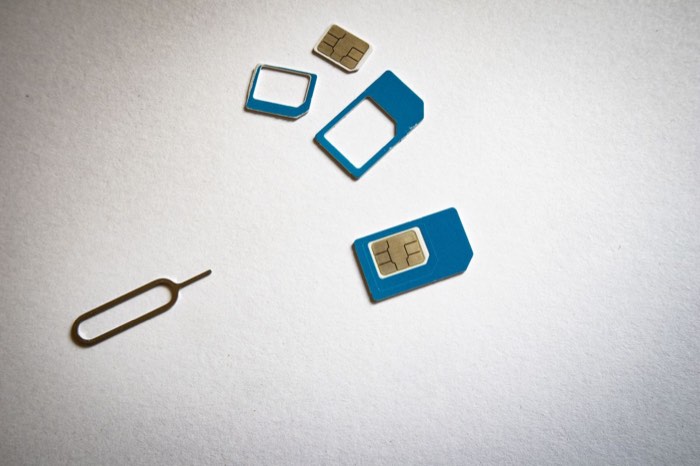
Physical SIM in Thailand
Two carriers sell tourist SIMs across Thailand: AIS and True-dtac. Both work the same way at the counter, so the real choice usually comes down to coverage in the specific area you're visiting.
AIS
Widely reported as Thailand's largest mobile operator by subscriber count.
True-dtac (formerly DTAC)
Merged with True Corporation in 2023.
Buying at the airport
The easiest option if you land with no plan sorted.
Both Suvarnabhumi (BKK) and Don Mueang (DMK) have AIS and True-dtac counters in arrivals. Suvarnabhumi handles international flights around the clock, so counter hours there are generally set to match, but check current opening hours directly if you're landing at an unusual time. The tradeoff is a queue, especially right after a big international flight lands. You'll fill out a registration form, hand over your passport, and wait a few minutes for activation once it's your turn.
AIS vs True-dtac, side by side
| AIS | True-dtac | |
|---|---|---|
| Where to buy | AIS shops, airport counters, some 7-Eleven stores | True-dtac/DTAC shops, airport counters, some 7-Eleven stores |
| Tourist plans | Fixed 8, 15, or 30-day tourist SIMs, plus standard prepaid top-ups | Fixed 8, 15, or 30-day tourist SIMs, including the Tourist INFINITE SIM range |
| eSIM or physical | Both available, same buying and activation process | Both available, same buying and activation process |
| Cost | Varies by plan length and data allowance; check the current rate directly | Changes regularly; confirm the current plan on the day |
| Advantage | Widest reach outside Bangkok, into rural and mountainous provinces | Strong in Bangkok and major tourist areas specifically |
| Best for | Trips into remote areas, national parks, or the north | City- and island-focused trips (Bangkok, Phuket, Koh Samui) |
"Largest" here refers to subscriber count, not coverage in any one specific area, that varies by region. Passport required for registration, a Thai regulatory rule, not an AIS-specific one. Still sold under the DTAC name at some counters and shops. Same buying process as AIS: passport required, activated on the spot.
AIS or True-dtac: which should you actually pick?
Choose AIS if
- Your trip goes beyond Bangkok and the main tourist cities
- You're visiting national parks, mountains, or rural provinces in the north
- Reach matters more to you than a small price difference
Choose True-dtac if
- Your trip stays within Bangkok, Phuket, Koh Samui, or other main tourist areas
- You're not relying on coverage in remote or rural areas
- You'd rather pick whichever counter has the shorter queue when you land
On real-world performance: Opensignal's independent August 2026 Thailand report names AIS the most-awarded operator overall, while True and DTAC jointly hold the "Best Network in Thailand" title on their combined network. Neither is a clear loser on quality, this is really about coverage on your specific route.
How to top up a Thai prepaid SIM
Three ways: 7-Eleven, the carrier's app, or a carrier shop.
At any 7-Eleven or convenience store counter, tell the cashier your number and how much credit you want. Through the carrier's own app once you've registered an account. Or at a carrier shop directly. Top-up vouchers are also sold at supermarkets and some hotels. An eSIM from MiloAway skips this step entirely since the plan is prepaid and bundled upfront.
eSIM in Thailand
The alternative to a physical SIM: install it digitally before you fly, skip the counter entirely, and it's active the moment you land. Here's what you need to know before choosing it.
Can you keep using your regular number too?
Yes, if your phone supports dual SIM.
Most eSIM-compatible phones from the last several years support running two SIM profiles at once, so your home number keeps working for calls and texts while the Thai SIM or eSIM handles data. A physical Thai SIM in a single-SIM-slot phone will replace your home SIM while it's in, meaning you'd need to swap back to receive calls or texts on your home number.
Does your phone support eSIM
Most phones sold in the last several years do. As a general guide:
Check your phone
This covers most travelers, but device and carrier restrictions vary by country of purchase. If you're not sure, check your phone's settings under Mobile/Cellular Data for an "Add eSIM" option, or search your exact model plus "eSIM support" before you fly.
How to install and activate an eSIM
- 1Buy your eSIM and receive a QR code by email, before you fly.
- 2Connect to WiFi (you need internet to download the eSIM profile).
- 3Go to your phone's Settings, find the eSIM or "Add Cellular Plan" option, and scan the QR code.
- 4Leave the eSIM installed but inactive until you land, so your home SIM keeps working normally until then.
- 5When you land, turn on the eSIM and enable data roaming for it in your phone's settings. You're connected within a minute or two.
Airalo, Saily and Holafly compared
These are the three other eSIM brands most people weigh up against MiloAway for Thailand. Here's what each one actually offers, feature by feature, not just a price.
| MiloAway | Airalo | Saily | Holafly | |
|---|---|---|---|---|
| Data structure | Unlimited | GB tiers | GB tiers | Unlimited |
| Country coverage | Thailand only | Multi-country | Multi-country | Multi-country |
| Free Thailand guide included | ||||
| 7-day price | £5.99 | £16.50 | £15.99 | £22.00 |
Based on the above: MiloAway is the cheapest of the four for a 7-day Thailand plan, and the only one built specifically around this one country rather than run as a multi-country platform. Airalo and Saily make more sense if you're covering several countries on the same trip; Holafly's appeal is being unlimited-only like MiloAway, at a higher price.
How much data do you actually need
Rough guide based on typical tourist use: maps, messaging, social media, and some streaming.
| Trip length | Light use | Heavy use |
|---|---|---|
| 1 week | 3 to 5 GB | 8 to 12 GB |
| 2 weeks | 6 to 10 GB | 15 to 20 GB |
| 1 month | 12 to 20 GB | Unlimited |
Treat this as a rough planning guide, not a measured figure: actual use varies a lot depending on how much you stream video, use your phone as a hotspot, navigate with maps running constantly, or post to social media. Light use means Google Maps, WhatsApp, Instagram browsing, and hotel bookings. Heavy use adds video calls, streaming, and working remotely. If you're not sure, an unlimited plan removes the guesswork entirely.
Real tourist SIM prices
The one price below we've confirmed directly is True-dtac's 8-day plan. Physical SIM prices change often and vary by counter, so rather than publish a number we can't personally stand behind, we've said so plainly, confirm the current rate in person or in the carrier's own app before you buy.
True-dtac
Tourist INFINITE SIM, 8 days
฿449
Unlimited data + free local calls (up to 15 min/call)
True-dtac
Tourist INFINITE SIM, 15 days
Varies — confirm in the True app or shop
Unlimited data
True-dtac
Tourist INFINITE SIM, 30 days
Varies — confirm in the True app or shop
Unlimited data
AIS
Lucky Tourist SIM, 8 days
Varies — confirm in the AIS app or shop
Unlimited data at full speed
AIS
Lucky Tourist SIM, 15 days
Varies — confirm in the AIS app or shop
Unlimited data at full speed
AIS
Lucky Tourist SIM, 30 days
Varies — confirm in the AIS app or shop
Unlimited data at full speed
Mistakes to avoid
- 1Buying from an unofficial airport tout instead of the actual AIS/True-dtac counter. You'll pay more for the same SIM.
- 2Assuming your phone supports eSIM without checking first. Most phones from the last few years do, but confirm before you fly. You can't switch to a physical SIM once you've landed without finding a shop.
- 3Forgetting your passport. Thai regulations require ID registration for any SIM card, tourist or otherwise. No passport, no SIM.
- 4Assuming "unlimited" data on a physical SIM means uncapped at full speed all trip. Most tourist plans throttle speed after a daily cap, same as most eSIMs. Check the fair-use terms before you rely on it for something time-sensitive.
- 5Buying a plan sized for a light trip and running out of data halfway through. If you're planning to video call home or stream anything, size up rather than guessing low.
- 6Not checking whether your phone is carrier-locked before you fly. A locked phone can't accept a physical Thai SIM at all, though it usually can still use an eSIM.
- 7Assuming your home SIM automatically works for data as soon as you land. Without a local SIM or eSIM active, you're on international roaming rates unless you've explicitly set that up and are comfortable with the cost.
Which one should I get?
Two questions, no email required.
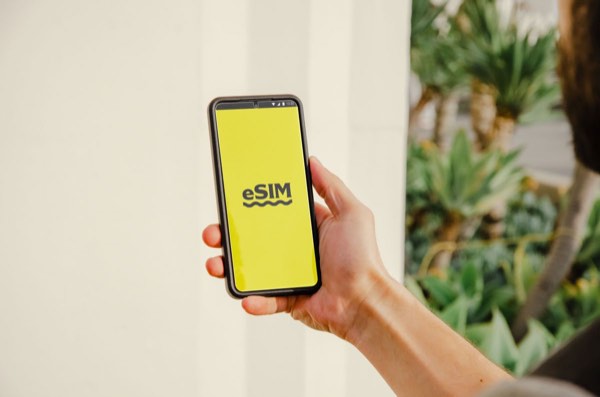
Does your phone support eSIM?
Which network is stronger where
Both networks cover the main tourist routes. Where they differ is in less-visited areas.
This applies whether you end up with a physical SIM or an eSIM, both AIS and True-dtac run the same network either way, so the choice below is about the network, not the SIM format.
| Region | Coverage |
|---|---|
| Bangkok | Both strong and reliable citywide, including the BTS and MRT lines. |
| Chiang Mai & the north | Both cover the city centre well. AIS extends further into rural and mountain areas. |
| Phuket, Koh Samui & main islands | Both solid in resort areas and main towns. Thins out on smaller, less-developed islands. |
| Deep south provinces | More limited on both networks. Not a typical tourist route. |
Skip the counter. Get connected before you land
Get your Thailand eSIMA physical SIM from AIS or True-dtac works fine and is easy to find at the airport. An eSIM does the same job, data the moment you land, but installs before you fly, so there's no counter, no queue, and no handing over your passport on arrival. Most travelers with an eSIM-compatible phone find it the simpler option. A physical SIM makes more sense if your phone doesn't support eSIM.